

AI Projects
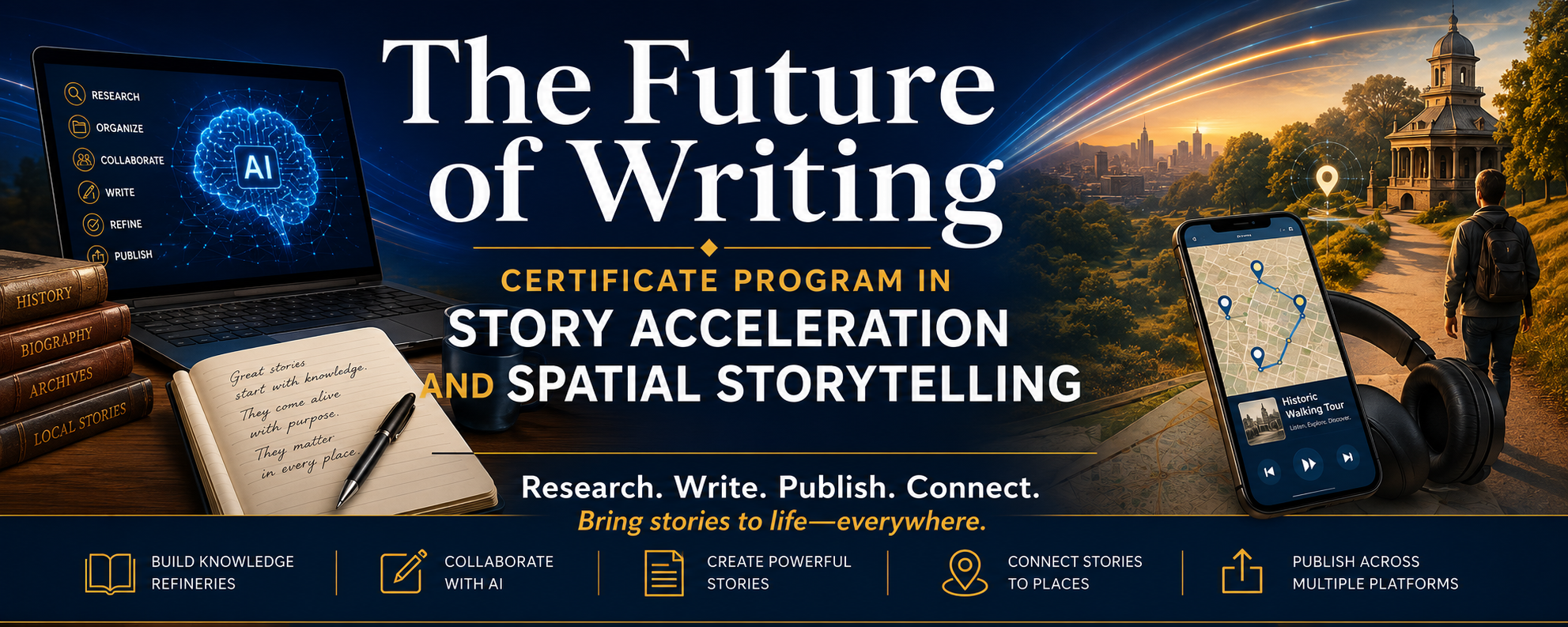
The Future of Writing is for people who refuse to let artificial intelligence replace their voice and instead want to learn how to amplify it—writers determined to earn a living through creativity, community leaders who want to shape public conversations, and anyone who believes ideas can change the world.
You'll learn a practical, repeatable method for combining your knowledge with AI to produce books, articles, podcasts, audio tours, presentations, and other work of a quality and volume that would once have required an entire creative team.
By the end of the course, you'll have the knowledge, tools, and publishing workflow to build the most powerful platform of all: one that enables your own voice to reach, persuade, and inspire audiences on a scale that was unimaginable just a few years ago.
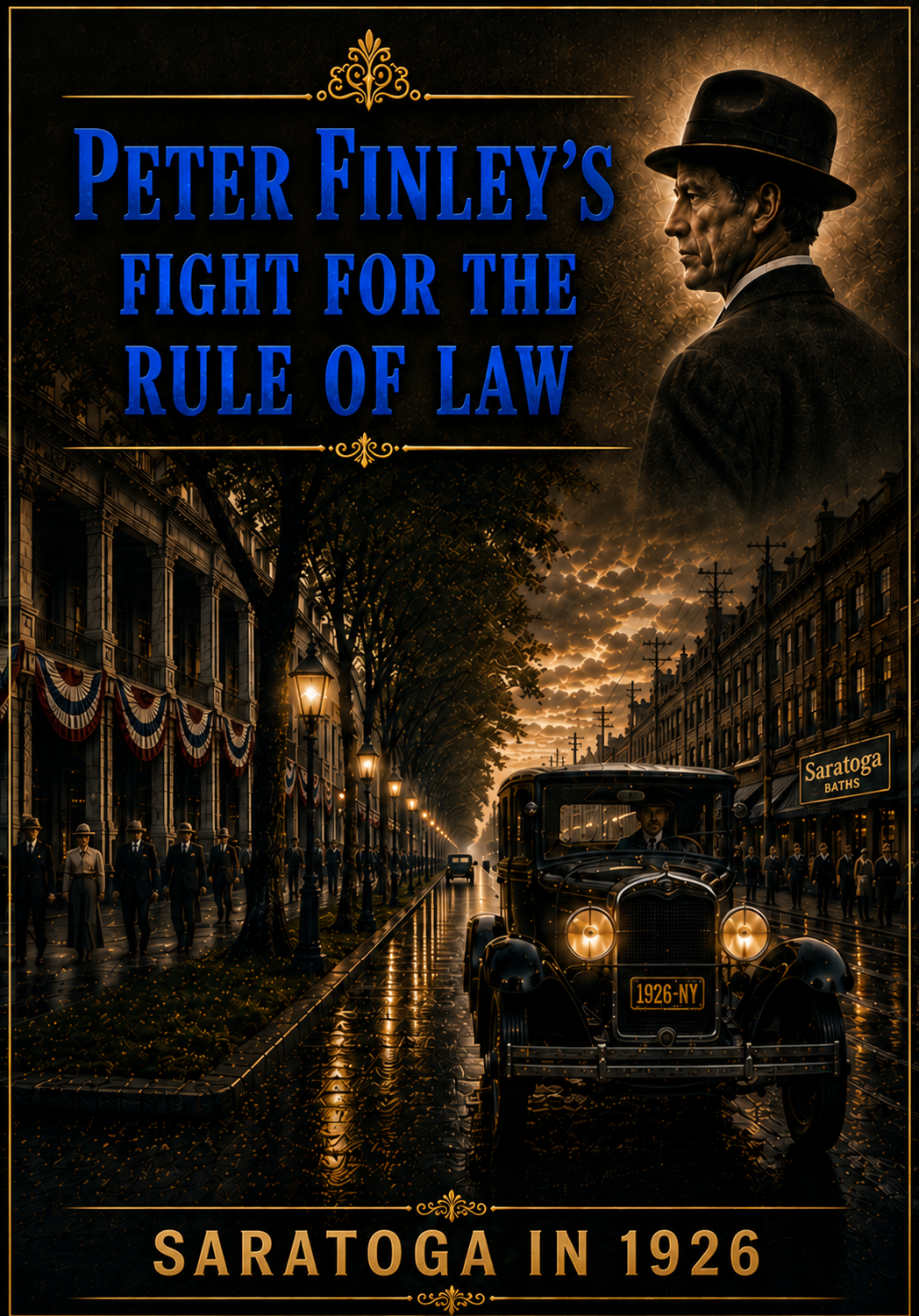
What happens when ordinary citizens decide the corruption of their city has gone too far?
Beginning June 21 and continuing through October 1, Stories from Open Space is recreating the dramatic summer of 1926 through a series of magazine-length posts chronicling Peter Finley's campaign to expose corruption and restore honest government in Saratoga Springs.
Combining traditional historical research with AI tools, we’ll transform this material into a self-guided audio tour, a print-on-demand book, and a digital public-history experience that brings Saratoga's most consequential political battle to life.
Along the way, we’ll describe our approach on AI at Work, showing how local history might be routinely preserved, interpreted, and shared in the future.
The stories were always here. Now the people who lived them can tell them.
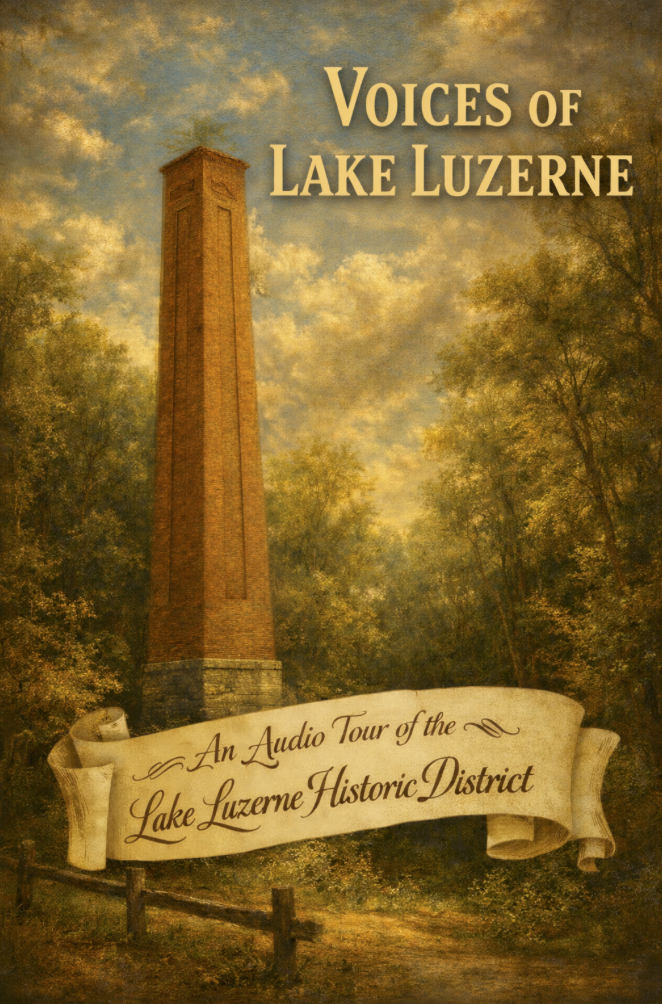
The fifth and most advanced audio tour we’ve published on Stories from Open Space, Voices of Lake Luzerne employs GPS markers on smartphones to trigger AI-generated stories told by 14 historical figures throughout the Lake Luzerne Historic District.
Inspired by the Lantern Walk offered each October by the Hadley-Lake Luzerne Historical Society, the tour
demonstrates a new approach to preserving and sharing local history. It demonstrates how local history can be brought to life for new generations of residents and visitors.