

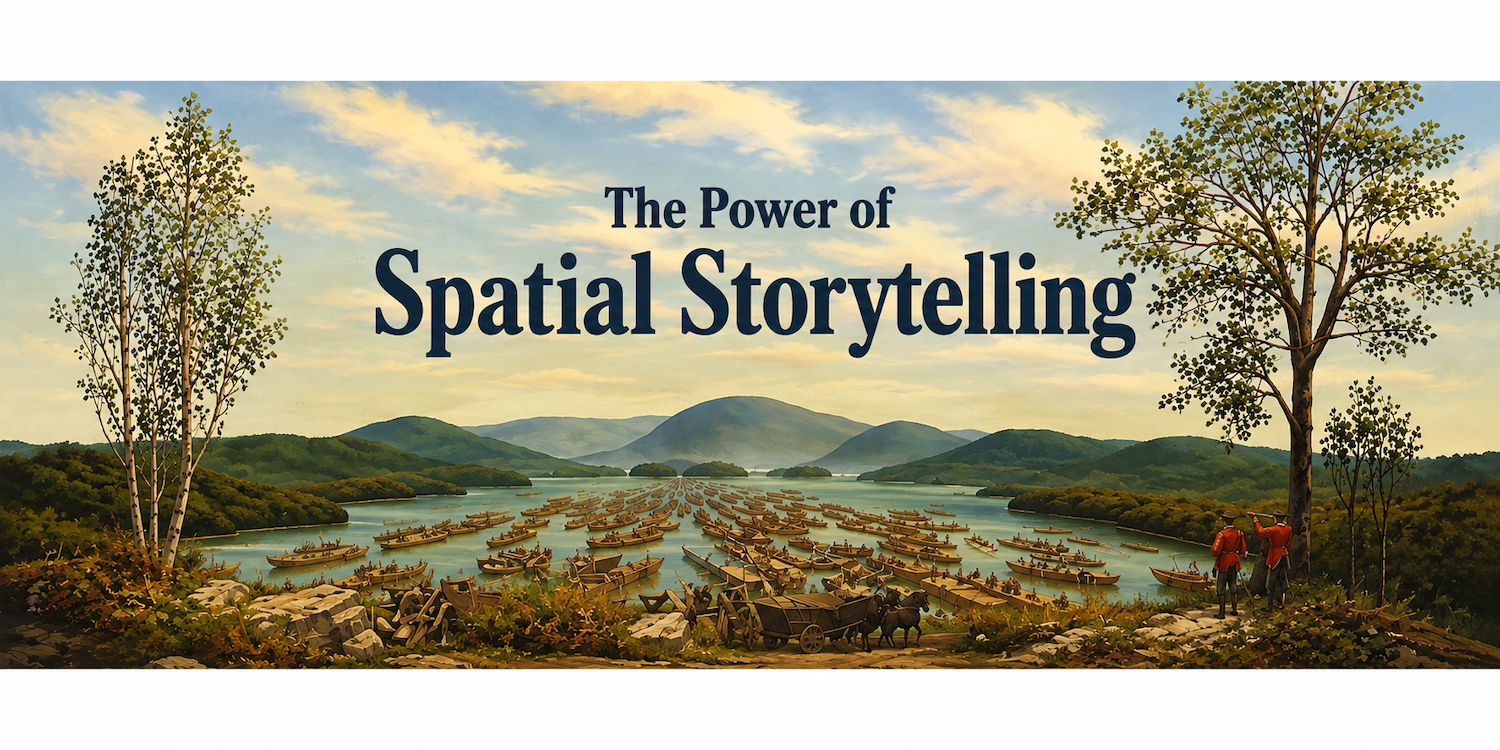
Bring your community’s history to life—right
where it happened
A six-week course that’s free to all who wish to explore a creative new medium for storytelling: self-guided audio tours featuring notable figures from history voiced by AI
Every community has stories worth telling. Imagine visitors discovering yours as they walk a historic street, pause beside a monument, or follow a scenic road—hearing the voices and experiences of people who helped shape the place.
Join Smartacus and STQRY for a free, six-week introduction to creating self-guided audio tours with artificial intelligence. We’ll demonstrate how historical research, thoughtful writing, imagined character voices, and location-based technology come together to create experiences people can explore on their smartphones.
Six Wednesdays Starting
September 30
7 to 8:30 p.m. Eastern
Online via Zoom
Have a place—and a story—in mind?
This course is for people who enjoy history, love to write, and want to help others discover what makes a place meaningful. We welcome historians, writers, students, educators, museum volunteers, and members of historical societies and community organizations.
You might have a walking tour in mind, a scenic driving route, or a single landmark whose story deserves a wider audience. You might simply be curious about what these tools make possible. Bring your interests, your questions, and, if you have one, an idea you’d like to develop.
What You’ll Learn
We’ll introduce the Smartacus Method of Spatial Storytelling, following a story from its sources to the visitor’s smartphone. Through demonstrations drawn from projects in development, you’ll learn how to:
Work with local experts and organize historical source material
Build a searchable “living library” using Gemini Notebooks
Create and refine narration with ElevenLabs
Assemble tour stops, images, maps,and GPS triggers
Build an audience by publishing stories in Substack
Stories Worth Hearing
Our process begins with people who know the history: historians, researchers, museum staff, and community members. Their expertise—and the sources they help us find—provides the foundation.
AI helps us organize that material, explore narrative possibilities, and produce audio more efficiently. We’ll show where these tools are useful and where human judgment remains essential: checking claims, resolving conflicting accounts, choosing a point of view, and making a story clear.
When we give a historic character an imagined voice, we are creating an interpretation. We’ll explain how to distinguish that interpretation from a documented quotation and keep the story grounded in evidence.
What You’ll Learn
Week 1 · Starts September 30
The Opportunity:
AI-Augmented Civic Publishing
How can a small team turn local knowledge into something a whole community can enjoy? We’ll introduce spatial storytelling as a form of civic publishing and demonstrate how a self-guided audio tour connects research, storytelling, and place. Walking through the production process, we’ll explore what makes a promising tour idea.
Week 2 · Starts October 7
Learning from Experts
Great storytelling begins capturing the knowledge and insights of experts. We’ll demonstrate how to organize a project in Basecamp, capture an expert conversation on Zoom, and use Otter to produce a searchable transcript.
Week 3 · Starts October 14
Developing Our ‘Living Library’
Books, archival documents, articles, interviews, and field notes become more useful when we can aggregated and explore them together in what what call a “living library” in Gemini Notebooks, a research environment that helps us ask questions, find connections, and develop source-based briefing material.
Week 4 · Starts October 21
Turning Knowledge into Story
We’ll use ChatGPT to develop openings, shape narrative arcs, explain complicated history, generate scripts, and write directions that are easy to follow. We’ll explore both third-person narration and imagined first-person accounts by historic characters. Throughout, we’ll focus on writing for the ear, preserving historical accuracy, and connecting the words to what visitors can see.
Week 5 · Starts October 28
Giving History a Voice—and a Place
We’ll demonstrate how to turn a script into narration with ElevenLabs, paying attention to voice, pronunciation, pacing, and delivery. Then we’ll bring audio, images, and locations together in STQRY. We’ll discuss GPS triggers, walking and driving times, closely spaced stops, and field testing—the practical choices that help a story play at the right moment.
Week 6 · November 4
From Story to Audience
A tour can generate stories that reach people before they ever arrive. We’ll use Substack to publish historical features, introduce characters, share discoveries, and invite readers to experience the places behind them.
For participants interested in continuing, we’ll explain opportunities to collaborate with Smartacus and STQRY.
See the Method at Work
Our examples show how different places call for different storytelling approaches.
We’ll share production decisions, lessons learned, and work in progress.
Voices of Lake Luzerne
A community’s history, told
through its characters
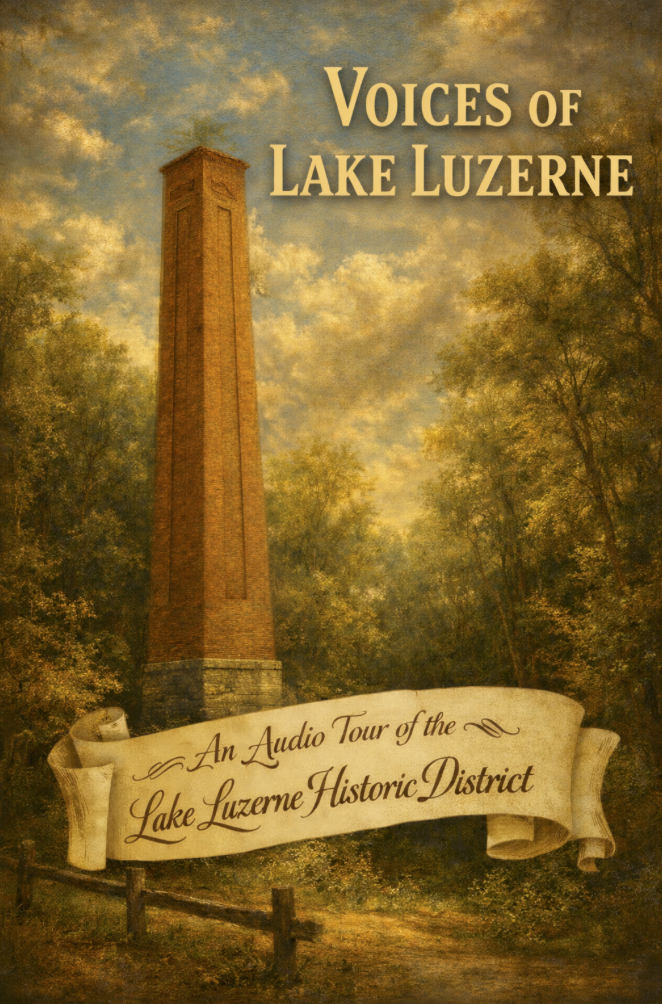
Two years in development, Voices of Lake Luzerne taught us how to create the imagined voices of historic characters, assigning them to read any narrative we write. Dominic Giordano, Skidmore College Class of 2025, generated the voices of 14 notables in the remarkably rich history of Lake Luzerne.
This tour is completed. We invite you to download tour here on Stories from Open Space.
Voices of the
Lake George Battlefield
Making a complex landscape understandable
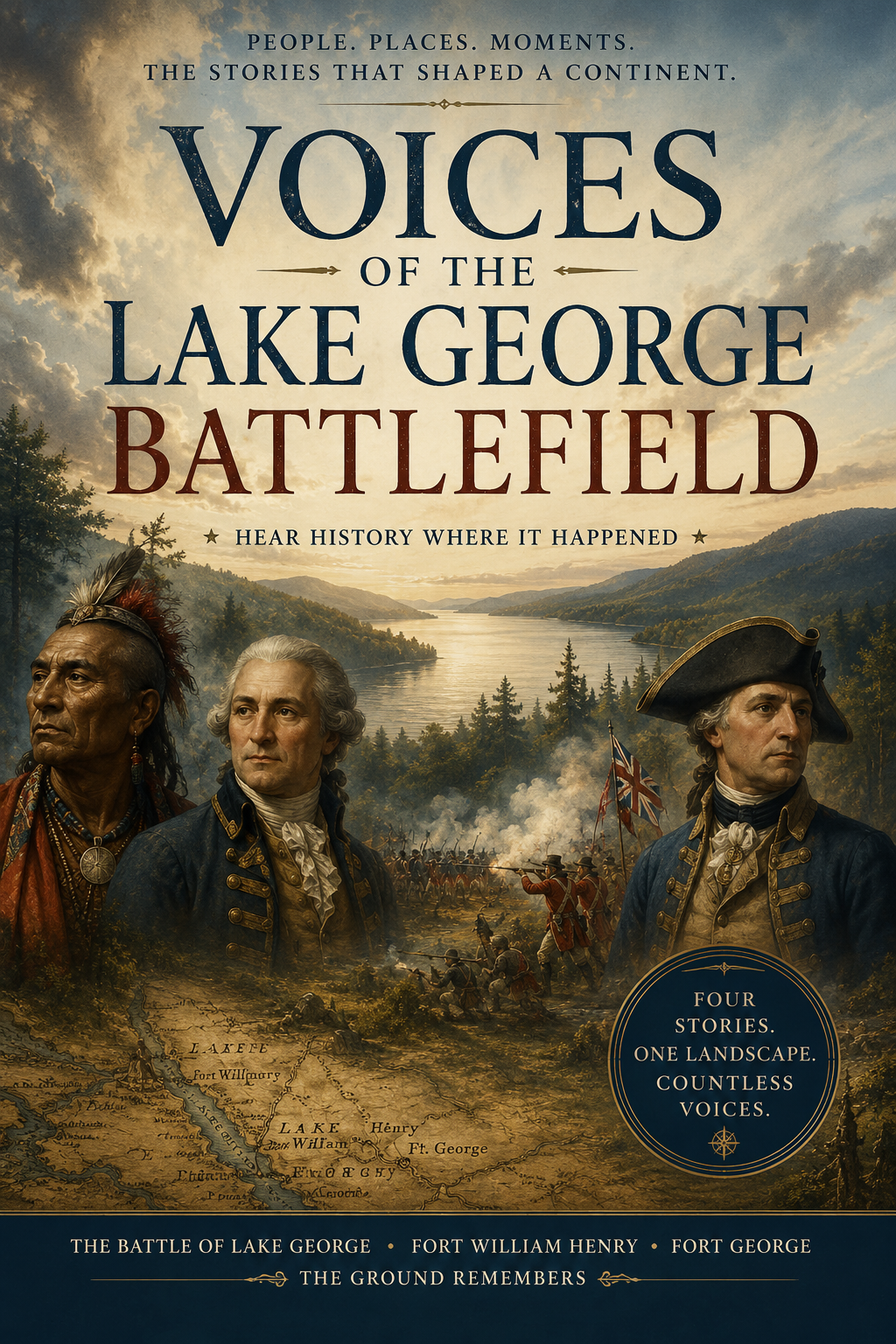
Our collaboration with the Lake George Battlefield Park Alliance explores the area’s role in the French and Indian War and the American Revolution. The challenge is to help visitors connect monuments, archaeological traces, and present-day views with events that unfolded across the landscape.
We’ll demonstrate how research, narration, images, and carefully placed tour stops work together—and why field testing is central to production.
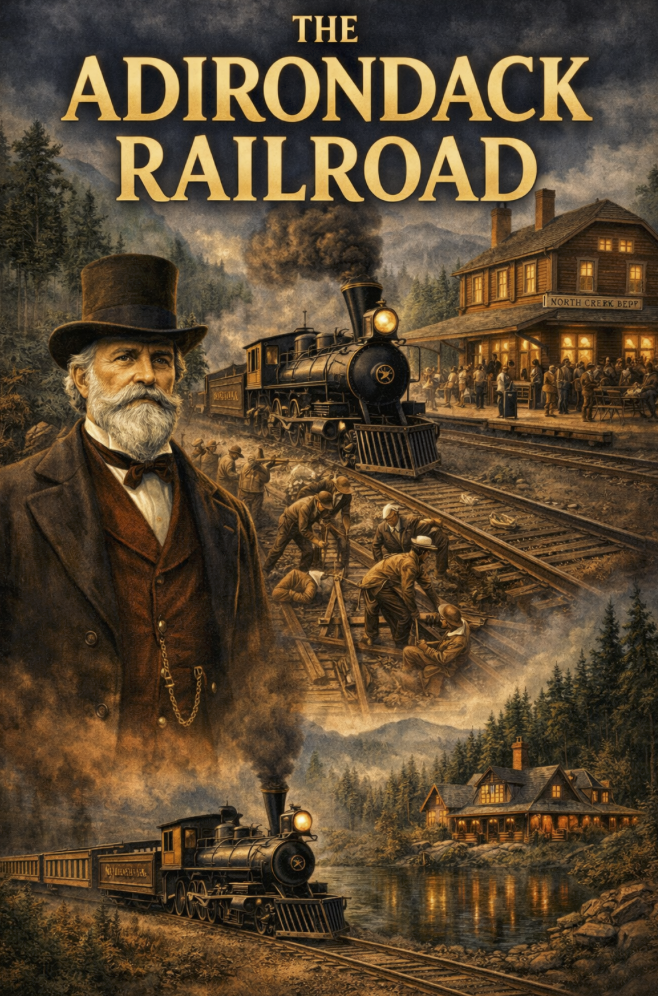
The Adirondack Railroad
Following a story through
the landscape
This driving tour follows the story of Thomas Durant’s railroad from Saratoga Springs toward the North Creek Depot Museum. Along the way, historic characters introduce communities shaped by industry, transportation, and tourism.
We’ll use the project to explorethe particular demands of a driving tour: timing narration, giving clear directions, offering optional detours, and connecting one place to the next.
A Gangster’s Paradise
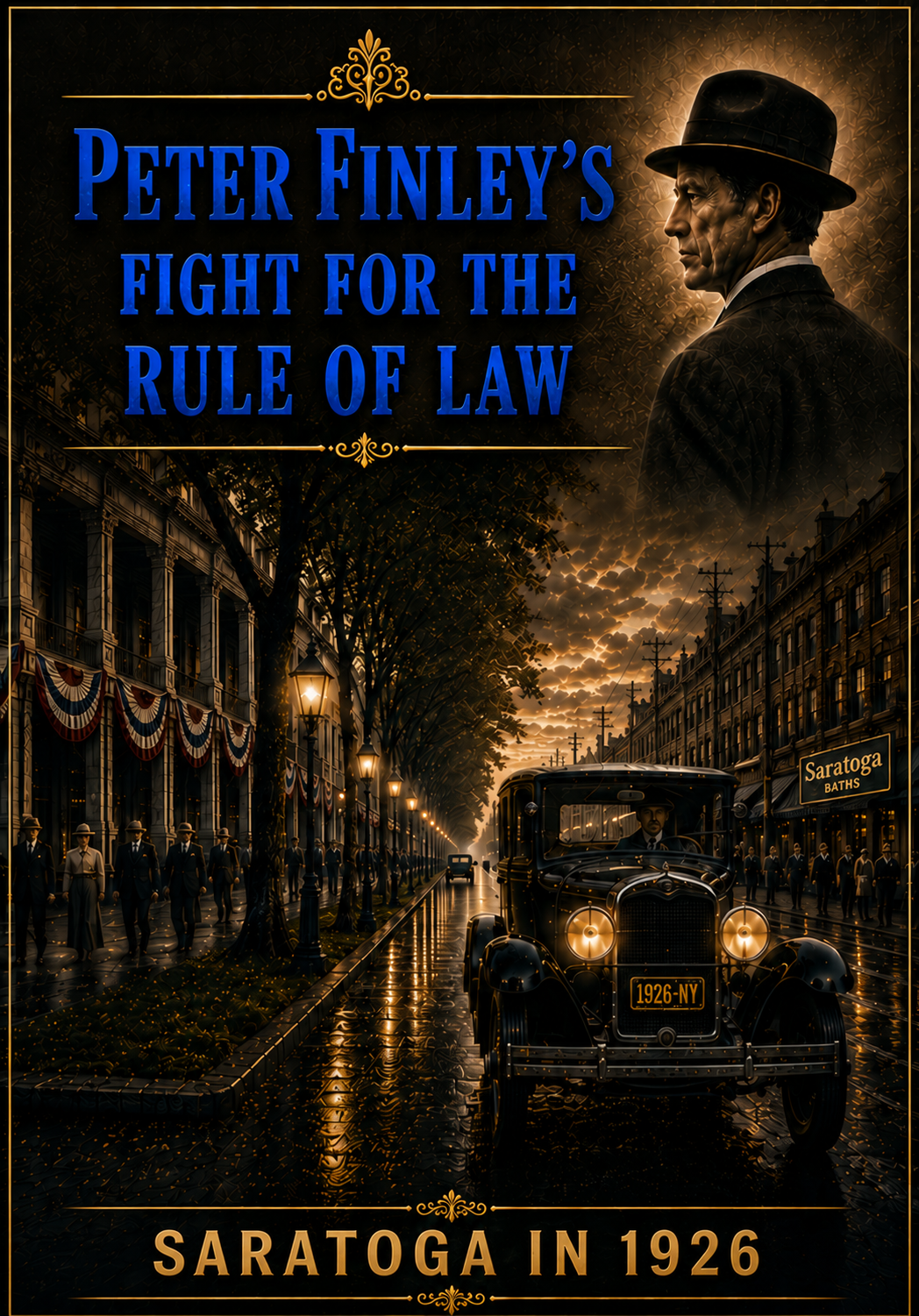
Turning a book into an experience of place
Working with historian Greg Veitch, we’re developing an audio companion to A Gangster’s Paradise, his account of gambling, bootlegging, and corruption in Saratoga Springs. Our related series, Saratoga in 1926, follows a challenge to the city’s political establishment in 1926.
This project demonstrates how a historian’s research can support new forms of storytelling, inviting audiences to explore the streets and places behind the account.
Course Leaders
Dan Forbush
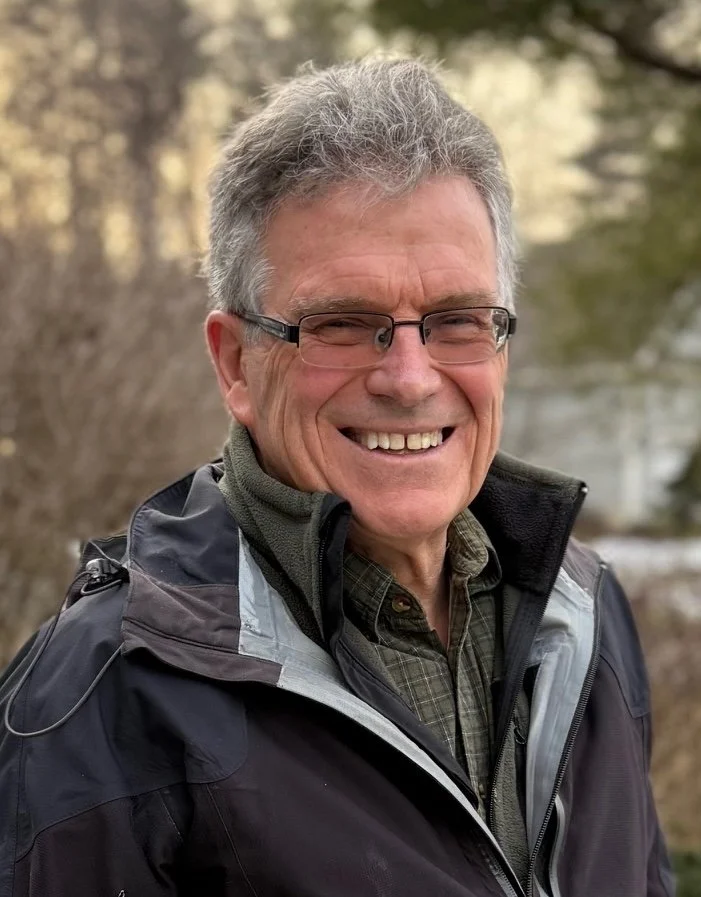
Dan’s interest in collaborative commmunications led him to launch ProfNet in 1992, connecting journalists with expert sources. Today, he is exploring how artificial intelligence can help people research, refine, and publish expert knowledge in new forms.
Through Smartacus Spatial Storytellers, he brings together historians, writers, students, and technology partners to develop self-guided audio tours. His focus is on creating a repeatable process that communities can use to tell their own stories.
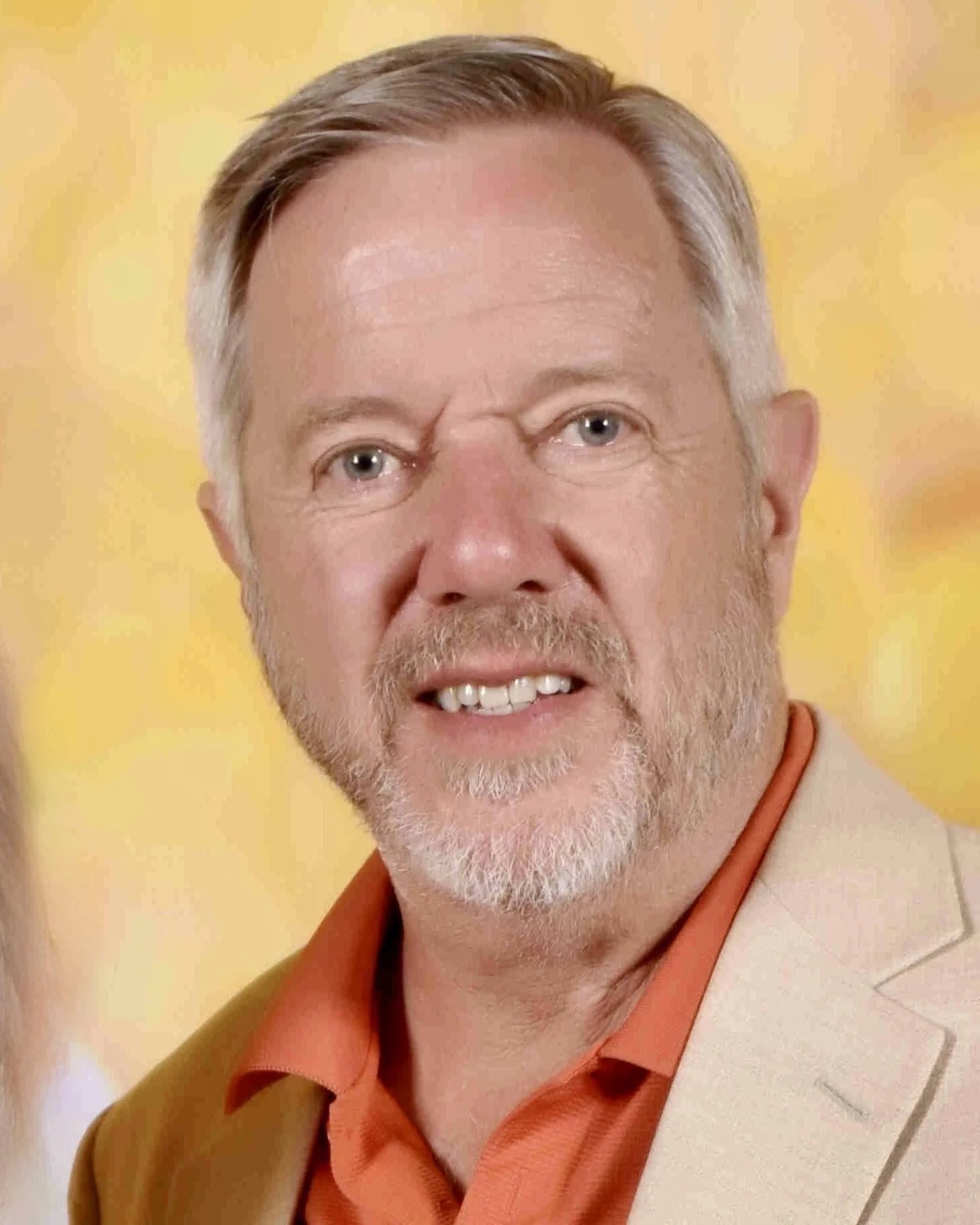
Dave Mahloy
Dave began exploring place-based storytelling in 2020 with a self-guided tour of the Concord Covered Bridge Historic District in Smyrna, Georgia. Working with a laptop, microphone, and Audacity, he taught himself the sound engineering, editing, and production needed to create the experience.
He is now developing a third generation of the tour in STQRY, combining historical research, new voices, artificial intelligence, and community collaboration. He brings firsthand experience of taking a tour from an initial idea through successive improvements.
Join Us
We’re offering this course at no charge to expand the community of writers, historians, and creatives of all kinds who are able to use these remarkable AI tools and agents in spatial storytelling and civic publishing.
If you have in mind a tour you’d like to develop, please let us know and we’ll give you a free workspace to develop it in Basecamp.
In addition to joining our course, we invite you to join the communities we’re creating and the conversations we’re having at Stories from Open Space, AI at Work, and Civic Conversations.
Please Fill Out and Submit this Form
Privacy: The information you provide will be used to register you for The Power of Spatial Storytelling and communicate with you about the course. We will not sell or share your contact information for unrelated marketing purposes.